About
The same physical phenomena that maintain the movement of granite landmasses on the basaltic crust allow ornamental images to emerge.
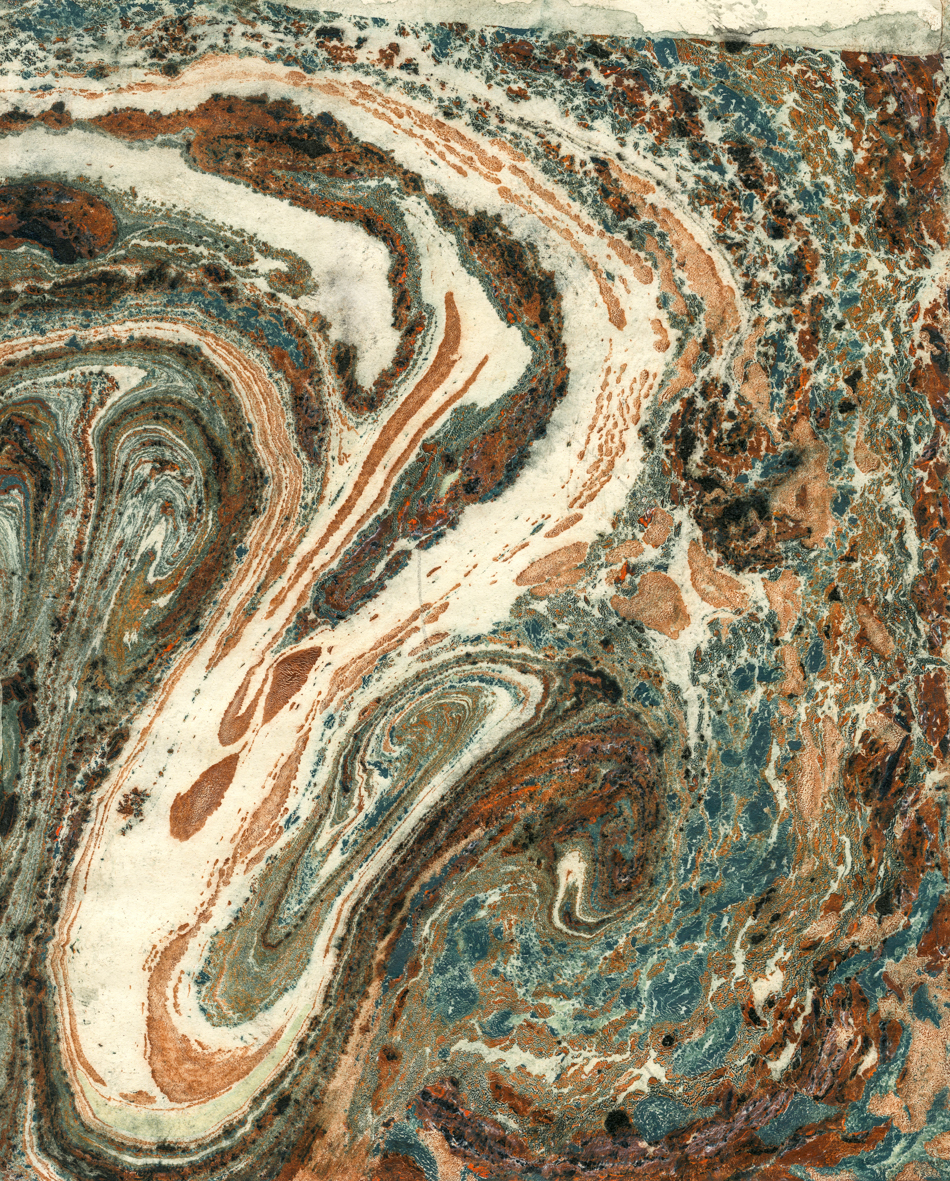
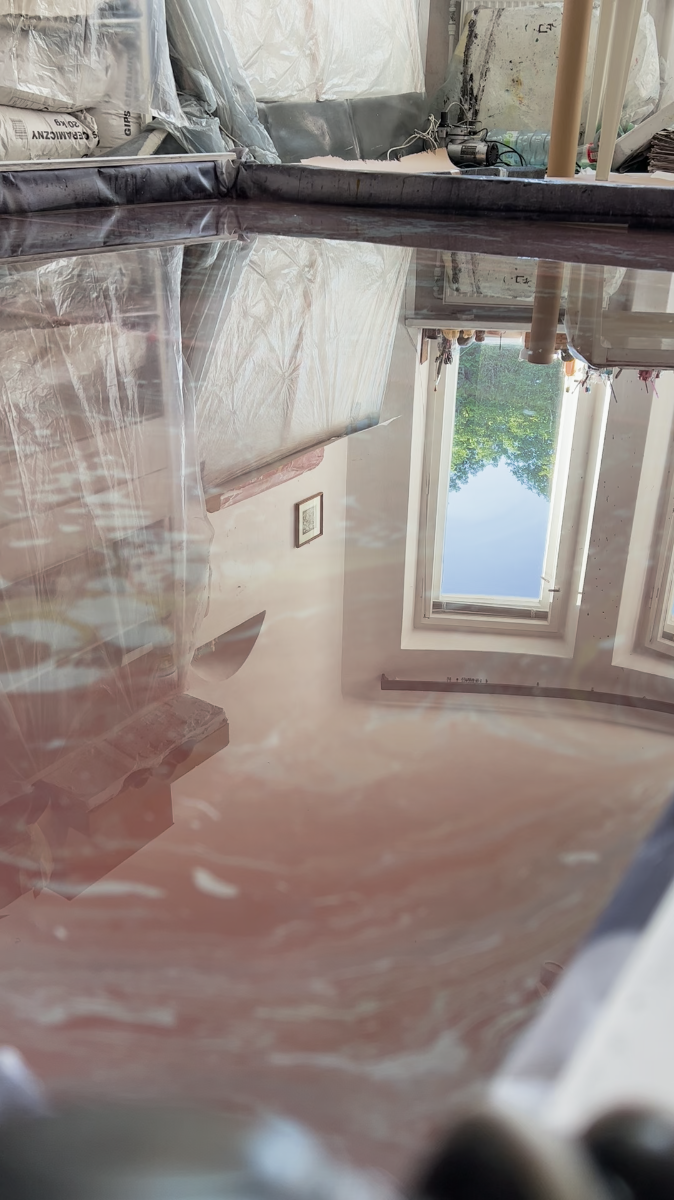
Originating in China, the technique of transferring patterns created on the surface of water onto paper takes advantage of differences in density, surface tension and gravity.
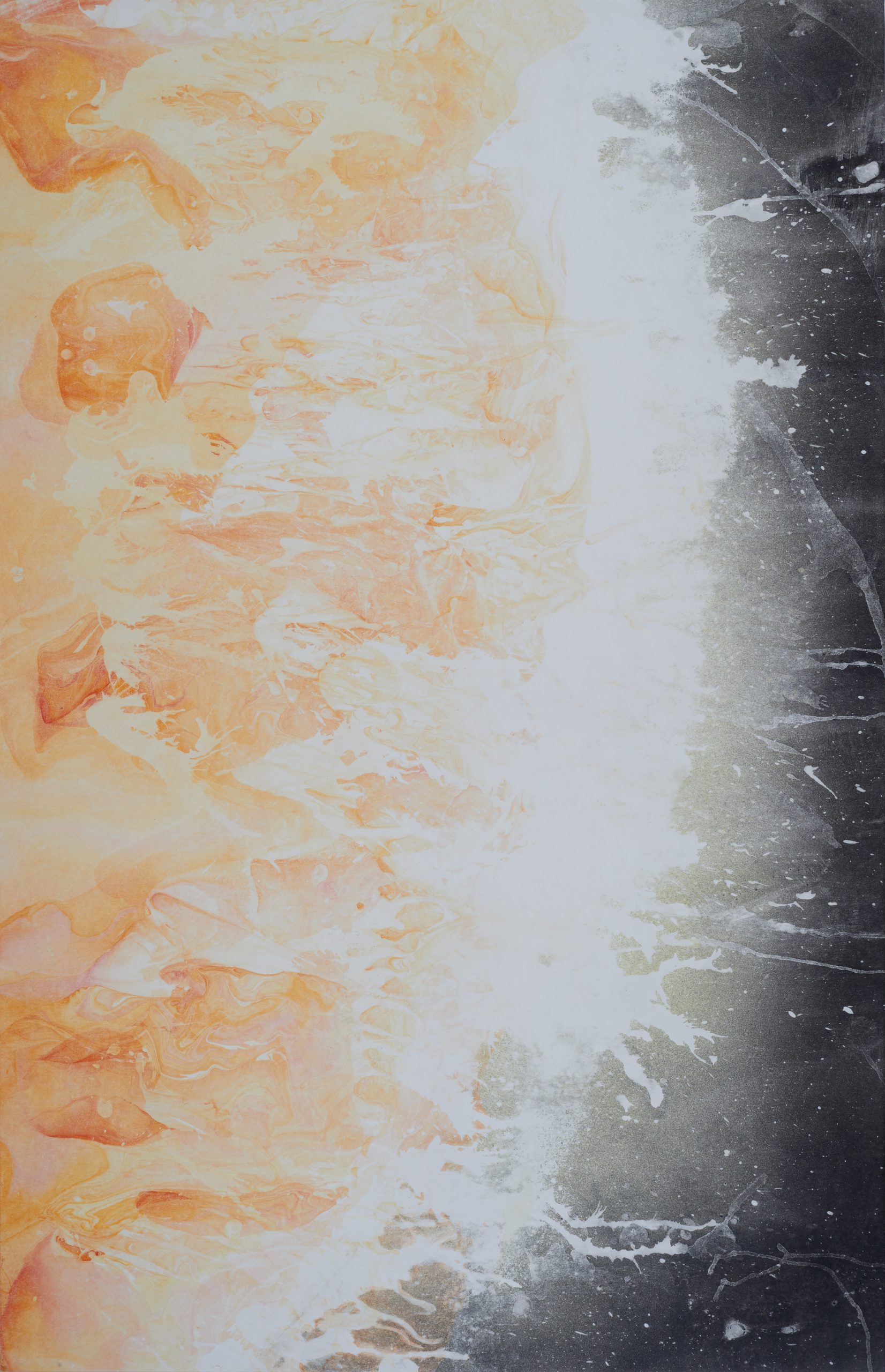
Fields of colour swirl and circulate on the surface of the water, collide with each other and separate like continents on a globe.
All one has to do is take them off the surface of the water by applying a piece of paper – or a plaster column – to it.
The oldest marbled papers date back to the Tang Dynasty (618–907). From China, the tradition moved to Japan and,
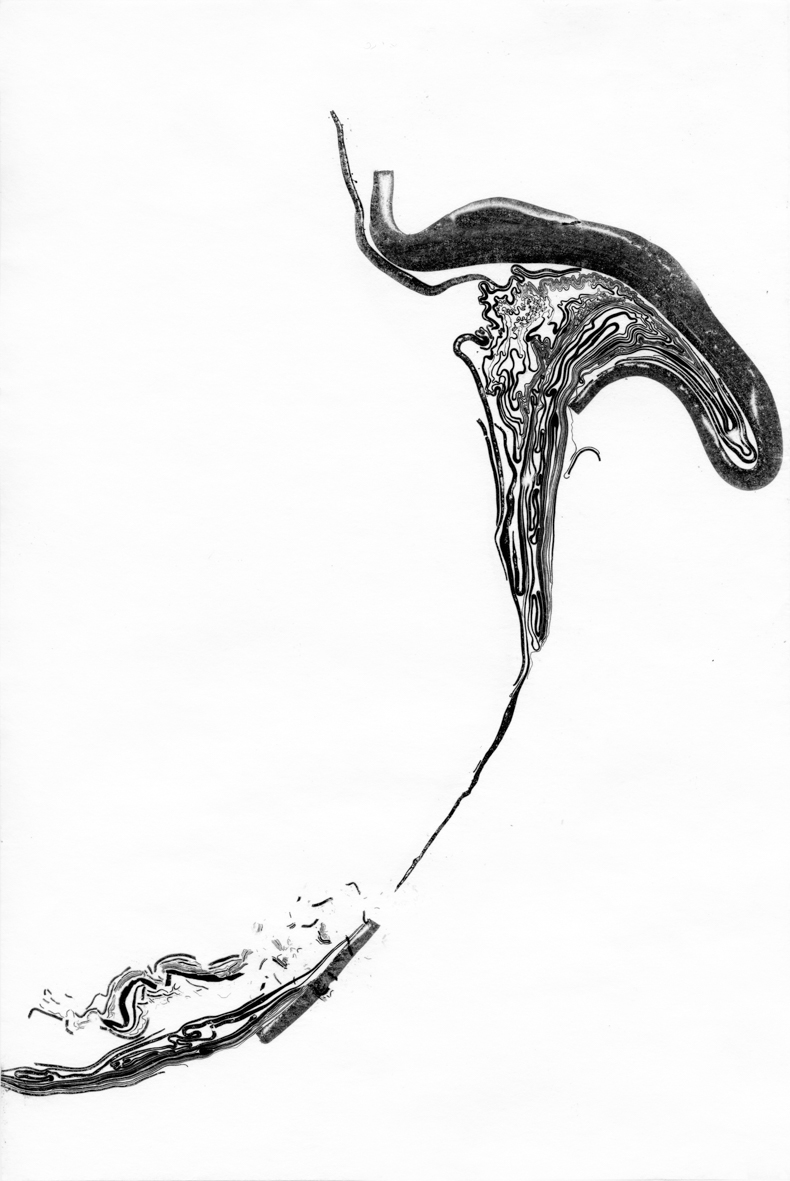
along the Silk Road, to the Mediterranean. To create Japanese Suminagashi, one needs only paper, water and ink. The Middle Eastern Ebru requires more ingredients.
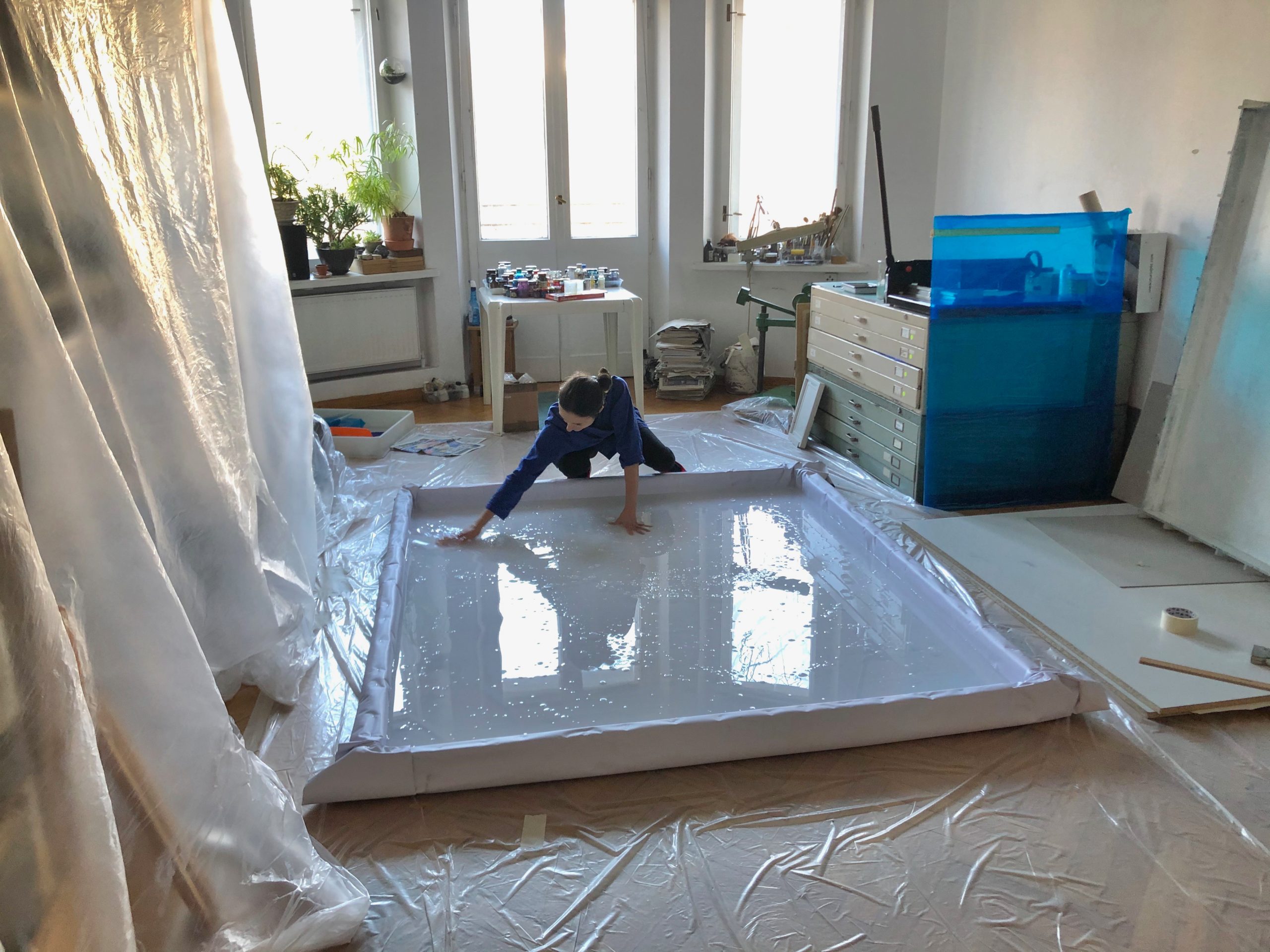
The water is thickened with tragacanth gum extracted from the Anatolian scrub, which increases the surface tension of the water bath and, when dry, forms a glossy, varnish-like coating on the image.
Pigments extracted
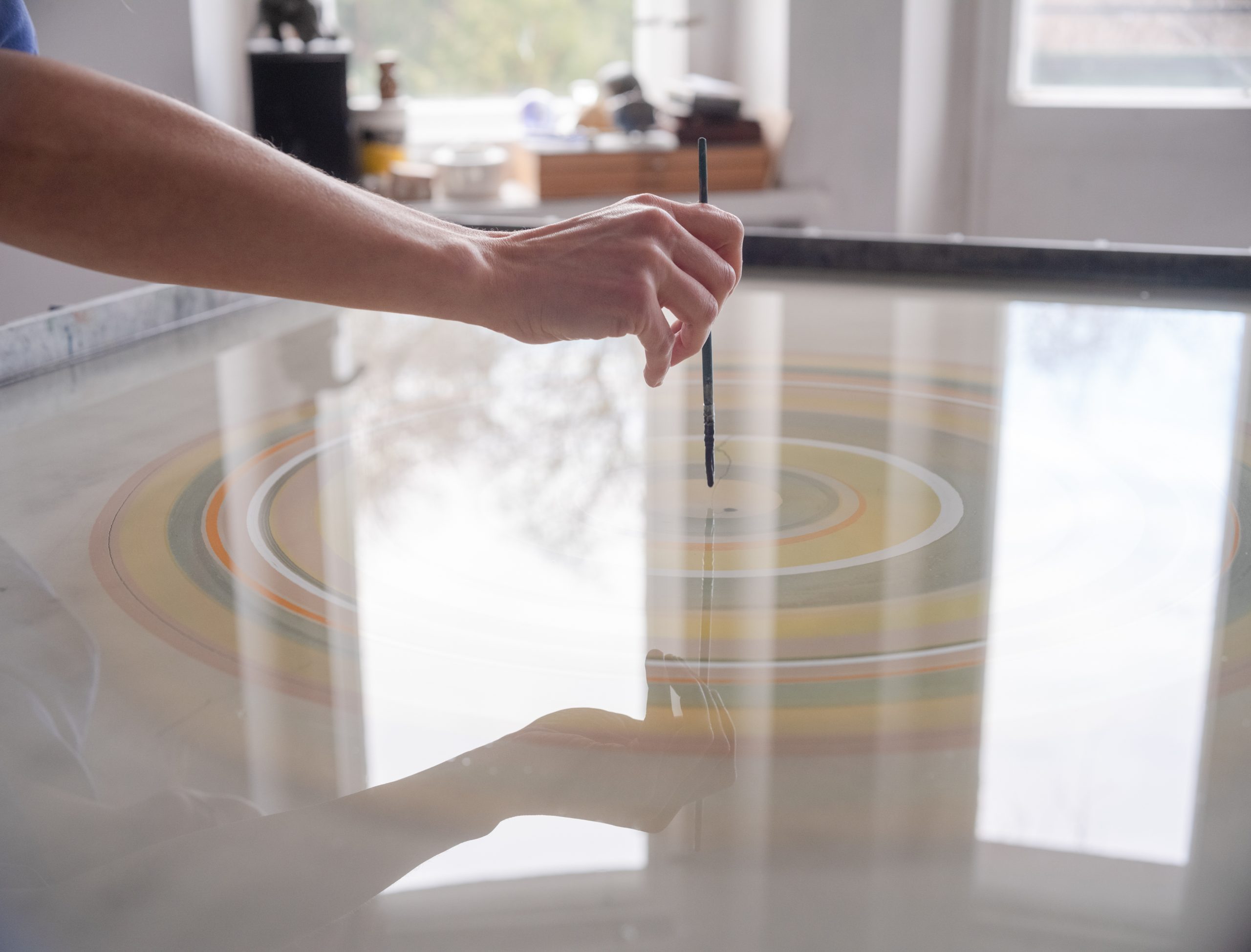
from grated clays and pollen, to which buffalo gall has been added, are poured onto the water. The gall ensures that the colours do not mix on the surface of the water. What do animal secretions, calligraphing dervishes, Florentine bookbinders and drifting continents have in common? Why do the fields of paint on water resemble space, wood, microscopic close-ups of cells
or the images that form under the eyelids after gazing at the sun?
Text by Agnieszka Tarasiuk